Mold Remediation & Assessment | Third-Party Testing | Southeast Michigan
Critical: Why Third-Party Testing Is Non-Negotiable
The conflict of interest problem:
If one company both tests for mold and remediates mold, there’s a financial conflict. The testing company benefits from finding mold (more work).
The remediation company benefits from claiming mold is worse than it is (more expensive work).
Does this cost more and take longer?
Yes. And it’s worth it. It’s the right process, and it protects you legally and health-wise.
How it actually works:
- You or we identify discoloration or potential growth
- We stop work and bring in a licensed third-party mold hygienist
- The hygienist collects air samples and surface samples
- The hygienist’s report confirms whether mold is actually present (or if it’s discoloration, dust, water staining, something else)
- If mold is confirmed, NextGen remediates based on the hygienist’s findings
- After remediation is complete, the hygienist returns to test again
- The hygienist confirms mold is gone before we finish
- We never have testing authority over our own work
Who This Is For
You see discoloration in your basement. You’re concerned about mold. You’ve heard horror stories about mold companies overcharging or doing unnecessary work. You want to know the process, understand your options, and make sure you’re not getting ripped off.
This section is for you.
Terminology (Compliance Language)
We use specific language because it matters legally and health-wise:
Discoloration:
A stain or dark spot we see. Could be mold, could be dust, could be water staining. Requires testing to know.
Potential growth:
Areas that are prone to mold growth—high humidity, recent water damage, etc. Requires monitoring and possibly testing.
Mold:
Confirmed by third-party testing. Only after the hygienist’s report do we know mold is actually present.
Why this distinction matters: Until confirmed by testing, saying “mold is present” exposes everyone to legal issues. The testing confirms what we’re actually dealing with.
Mold Remediation Process
01
Third-Party Assessment and Testing
A licensed mold hygienist comes out, collects air and surface samples, sends them to a lab.
02
Lab Results Confirmation
The lab confirms whether mold is present and what type.
03
Create Remediation Estimate
Based on the hygienist’s findings, we estimate the scope and cost.
04
Remediation Begins
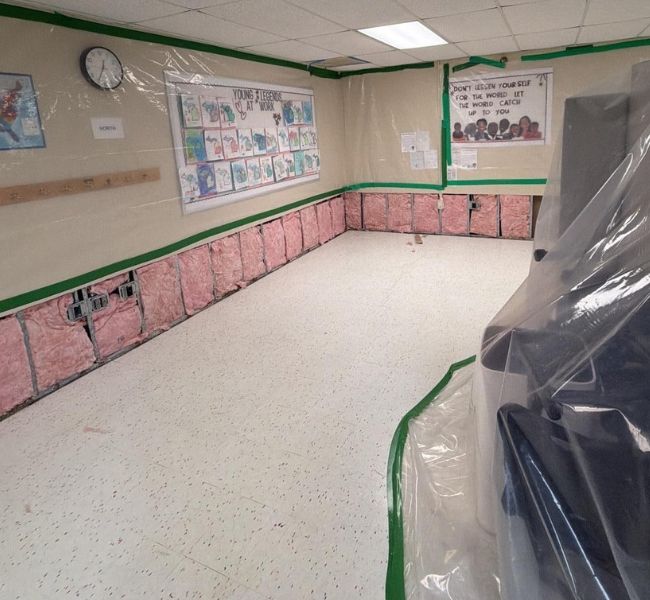
We remove affected materials (drywall, insulation, etc.). We deep clean structures. We seal studs with shellac. We ensure proper drying.
05
Specialized HVAC Cleaning
We clean HVAC systems and manage air circulation to prevent spore spread.
06
Post-Remediation Testing
The third-party hygienist returns to test again.
07
Confirmation Report
The hygienist confirms mold is gone before we finish.
08
Final Walkthrough and Warranty
You inspect. We warranty the work for two years.
Why Mold Is Different From Water or Fire Damage
Insurance typically does NOT cover mold remediation.
You often pay out of pocket. This means:
- Longer consultation to understand options and costs
- More detailed education about what mold actually is and what remediation involves
- Different timeline and budget conversation
- More emphasis on prevention going forward
We don’t shy away from this. We explain it clearly upfront.
Mold Prevention (Water Damage Drying)
Here’s a critical fact: mold prevention starts with proper water damage drying.
If water damage is dried incorrectly, mold grows in hidden places—inside walls, under flooring, in crawl spaces.
This is why we take water damage drying seriously. We:
- Dry to industry-standard moisture levels
- Cut drywall strategically to access hidden areas
- Use dehumidifiers and air movers
- Monitor moisture over time
Proper drying = mold prevention.
What Happens If Mold Isn't Treated Correctly
- It spreads to more materials
- It becomes harder and more expensive to remediate
- It poses health risks, especially for people with respiratory issues or compromised immune systems
- It damages property value and makes homes unsellable
FAQs
What's the difference between discoloration and mold?
Discoloration is what you see—could be mold, could be dust, could be water staining. Testing confirms which.
Why do I need third-party testing if I can see mold?
Because if you’re wrong, you’ve remediated for no reason. Because if we’re wrong, we’ve created liability. Because the type of mold matters for remediation. Testing removes guesswork.
Can NextGen test and remediate, or do you have to bring in someone else?
We remediate. A licensed third-party hygienist tests. This protects you from conflict of interest.
Why is third-party testing so important?
Conflict of interest. If we test our own work, we benefit from finding mold and overstating severity. An independent hygienist has no financial incentive to exaggerate.
How much does mold testing cost?
Typically $300-$800 for air and surface sampling. Depends on size of area and number of samples needed. Hygienist quotes vary.
How long does mold remediation take?
Depends on scope. A single room might take 1-2 weeks. Multiple rooms or wall cavities might take 3-4 weeks.
Does insurance cover mold remediation?
Usually not. Mold is typically excluded from homeowner’s policies or requires a separate rider. You usually pay out-of-pocket. We can explain your coverage and options.
What's the difference between mold removal and mold remediation?
“Removal” suggests just taking it out. “Remediation” means identifying all affected materials, removing them, cleaning, treating, drying, testing, and confirming it’s gone. We do remediation.
How do I prevent mold after water damage?
Dry it properly and quickly. Remove wet materials. Monitor humidity. Fix the water source so it doesn’t happen again. Professional drying is critical.
Is mold dangerous? Should I be worried?
Mold can pose health risks, especially for people with asthma, allergies, or compromised immune systems. Children and elderly people are also at higher risk. It should be taken seriously and handled properly.
Why did mold grow in my house?
Moisture + time. Water damage, high humidity, poor ventilation, or slow drying all create conditions for mold. It needs moisture to grow.
What if mold comes back after you remediate?
We warranty the work for two years on the exact remediation we completed. If it comes back due to our work not being done correctly, we handle it. If it comes back because of a new water source or moisture issue, that’s a different problem.
How often should I have my house tested for mold?
Not usually necessary unless you have water damage, visible discoloration, or health symptoms. Testing is reactive, not preventive.
Local Service Areas
NextGen coordinates mold remediation across southeast Michigan through trusted relationships with licensed mold hygienists in Canton, Novi, Plymouth, Birmingham, Farmington, and surrounding areas. We handle remediation. Third-party specialists handle testing.